You’re going on a trip and the time has come to think about what to pack. If you’re lucky enough to be flying with a proper full-service airline, you can probably take one (or even two) 23kg bags. A big allowance offers plenty of flexibility, with the downside being that you have to lug it all around!
On the other hand, if you’re a bit of a cheapskate, or are just trying to keep things light and easy, a carry-on-only approach might be more your style. This opens up the wonderful world of low-cost airlines, but at what cost? Don’t even think about taking a suitcase unless you want to be charged an arm and a leg. Your backpack might not even meet what the airline considers “carry-on”.
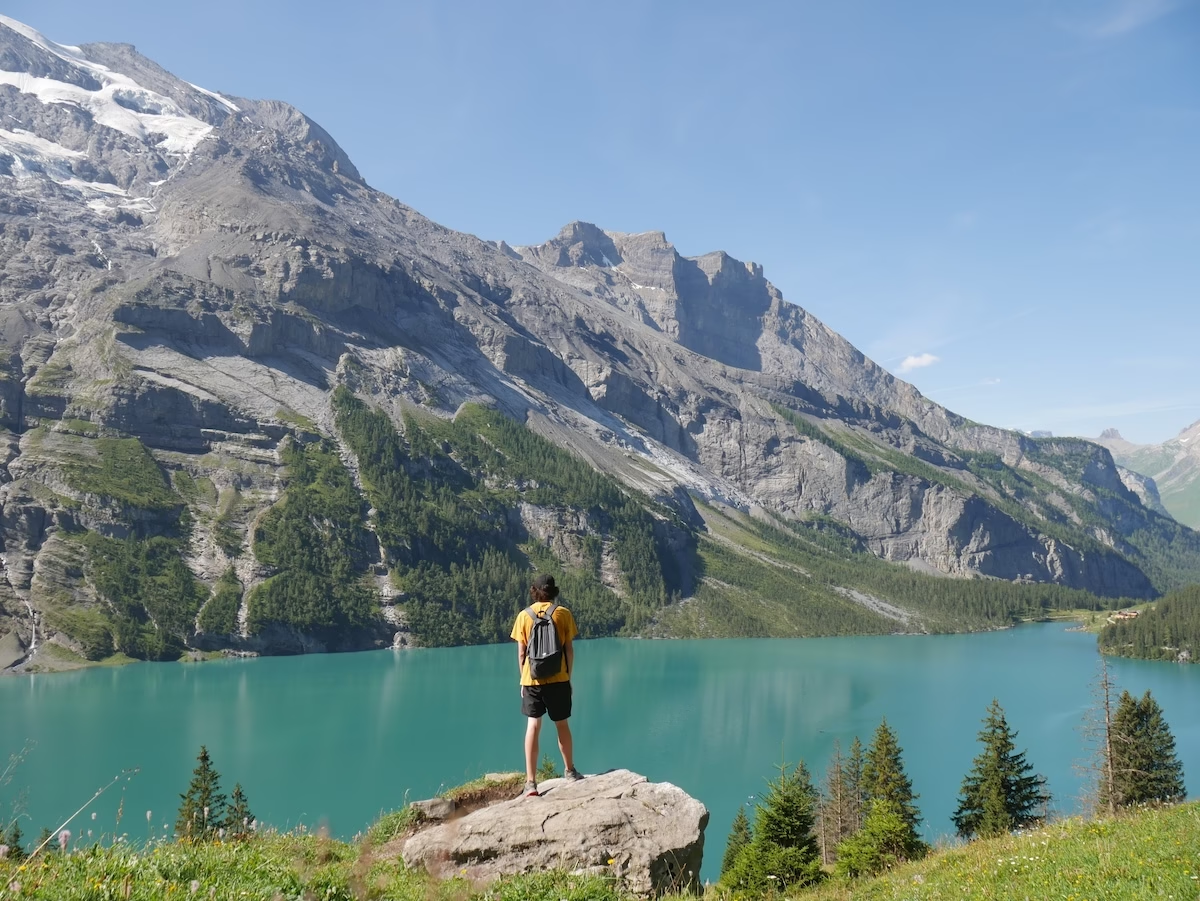
For the sake of both cost and simplicity, I spent almost six months travelling Europe and South East Asia with only a backpack. And not one of those massive backpacks that are synonymous with most backpackers. Just a regular backpack that you might take to work or school.
I flew around a dozen flights on budget airlines, most of which had a carry-on allowance of just 7kg. Fitting enough clothes to cover different seasons, climates and situations was a challenge I’m not sure I’ve fully figured out yet. But along the way, I picked up some valuable insights about what to pack when travelling light, especially when space is tight.
Here are the things I’ll now always carry with me.
A smaller bag (for day trips and essentials)
Yes, it’s bag-ception. I almost decided against taking a small folding backpack but it ended up being super handy. It let me do what most travellers do, just on a smaller scale: carrying only what I needed out of my main bag when heading out for day trips or hikes.
It also meant I could leave my main backpack at my accommodation or in a locker, take my essentials and valuables with me, and not worry about anything important going missing.
A shoulder bag, tote bag or any other small bag would work just as well. You could even pick one up while you’re travelling as a souvenir. Just make sure it folds down and fits easily into your main bag.
A pack of tissues
This might seem obvious to some, but I’m including it as someone who usually does have tissues on them, especially in winter. My trip began in Europe right at the start of summer, though, so tissues weren’t high on my packing list. They should have been…
It only takes a few situations where you really need tissues to realise just how important they are. From dealing with a case of the sniffles to cleaning up spills, they’re surprisingly versatile.
Where they truly came in clutch for me was on an old overnight train from Podgorica, Montenegro to Belgrade, Serbia. I’ll spare you the details, but the facilities have very limited amenities.
I struggled to find small packs of tissues that weren’t wildly overpriced. Instead, I resorted to grabbing them from places I was staying or eating at. Next time I’ll just bring some from home.
Basic first aid (even when space is tight)
It was silly of me to have planned to do a fair bit of physical activity on this trip while carrying literally no first aid supplies. Even though that’s probably the case for most travellers, it really shouldn’t be.
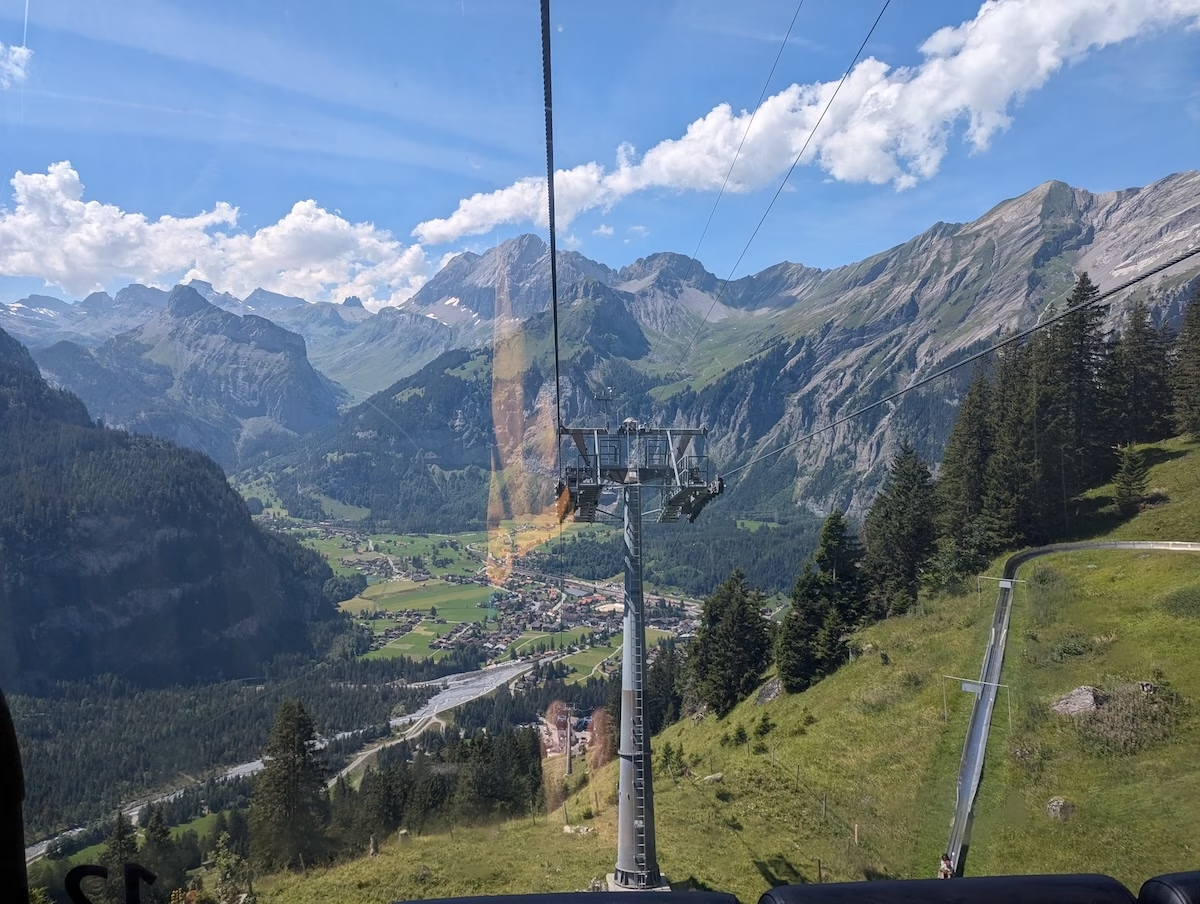
I learned my lesson around a month into my trip, while tobogganing of all things. The mountain coaster at Lake Oeschinen, which I visited during my budget visit to Switzerland, was the setting.
While waiting in line, I overheard people exiting tell their friends, “you really don’t need to brake at all”. When it was my turn, I stayed cautious and obeyed the signs, though I probably went a bit faster than I otherwise would have.
Everything was fine until I rounded one of the last corners, where another rider had come to a complete stop for no reason. I braked hard to avoid hitting them, which worked a bit too well. I fell off the back of the toboggan and grazed my arm and wrist against the track.
Between the friction and the heat of the track, I ended up with some small but fairly nasty burns. It cost me a fortune to get ointment and bandages from a pharmacy. The pain didn’t completely go away for a couple of weeks, and it took months for the scars to fade.
On the bright side, I kept bandages and band-aids with me for the rest of the trip and was able to help out other travellers a few times when they needed them.
US dollars and euros
I’ve never been someone who worries much about foreign currencies while travelling. I usually carry a debit card with no international fees or ATM withdrawal charges, plus a backup debit card and a credit card for emergencies.
Up until this trip, my approach had never failed me. Maybe that’s because I’d mostly visited countries that were either cashless or where cash was easy to access.
This time, I found that a bit of pre-planning would have gone a long way. I visited countries where “cash is king”, but where actually getting cash could be expensive and frustrating.
More than once, I flew into airports where you need local cash to take any form of transport. The only way to get it? Airport ATMs with outrageous fees. I was left choosing between withdrawing a small amount and paying 30%+ in fees, or withdrawing a larger amount and hoping it covered my entire stay. Since I hate being overcharged, I went with the latter but ended up with cash leftover.
In some places, I also ran into supply issues where ATMs simply ran out of cash.
A solution I’d never considered was carrying major currencies like US dollars or euros. In some cases, you can pay directly with them, including in European countries that don’t use the euro. It never hurts to ask, as long as you know what exchange rate you’re being offered.
Local currency exchanges can sometimes offer genuinely fair rates for major currencies, which surprised me. In Serbia, I was able to convert euros to Serbian dinars at almost exactly the market rate. In Jordan, I similarly converted leftover Jordanian dinars to US dollars with minimal loss.
Having US dollars or euros won’t solve every cash problem, but it helped me more than I expected.
A genuinely waterproof wallet
Before leaving, I bought what I thought was a waterproof wallet to store my passport, International Driving Permit and any paperwork or cash. This was important, since passports aren’t waterproof and International Driving Permits are just flimsy cardboard.
I carried this wallet everywhere, including in my smaller backpack on day trips and hikes. It was on one of these hikes that I discovered neither the wallet nor the backpack were actually waterproof.
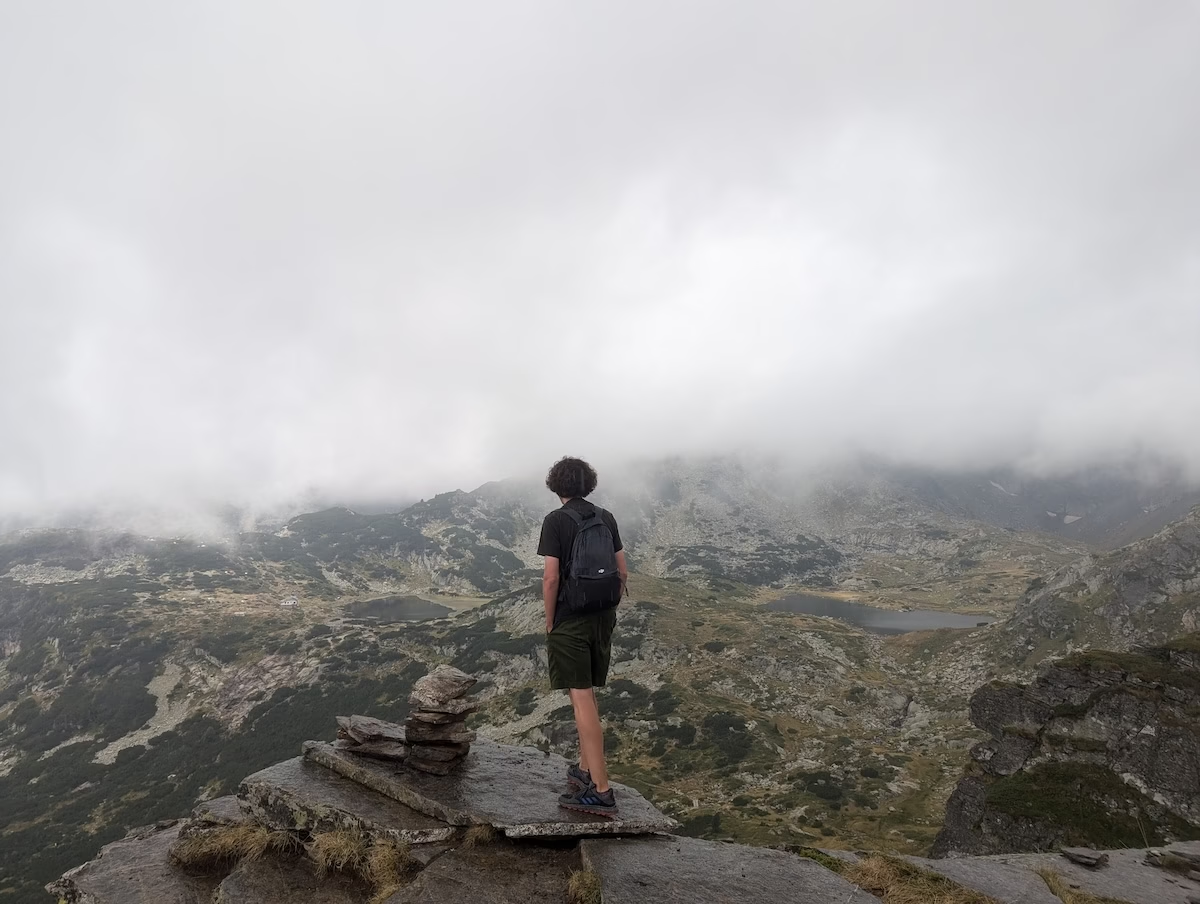
While staying at a hostel in Sofia, I booked a day trip to Rila Monastery and the Seven Rila Lakes. This was one of the highlights of my entire trip. Unfortunately, about halfway through the hike, the weather took a turn and I ended up completely drenched, along with everything in my bag.
I took shelter in a small cabin, warmed up with a bowl of soup (paid for using my emergency euros, despite Bulgaria using the lev at the time), and assessed the damage.
Most things were fine, but my International Driving Permit fared badly. The ink had run, it was almost unreadable, and once it dried, I couldn’t open it without tearing it.
Ironically, despite hiring vehicles in three countries where an International Driving Permit is technically required, only once was I even asked about it, and they didn’t need to see it.
Still, the lesson stuck. A properly waterproof sleeve for documents, cash and other key items is something I’ll always carry in the future.
Leave a Reply