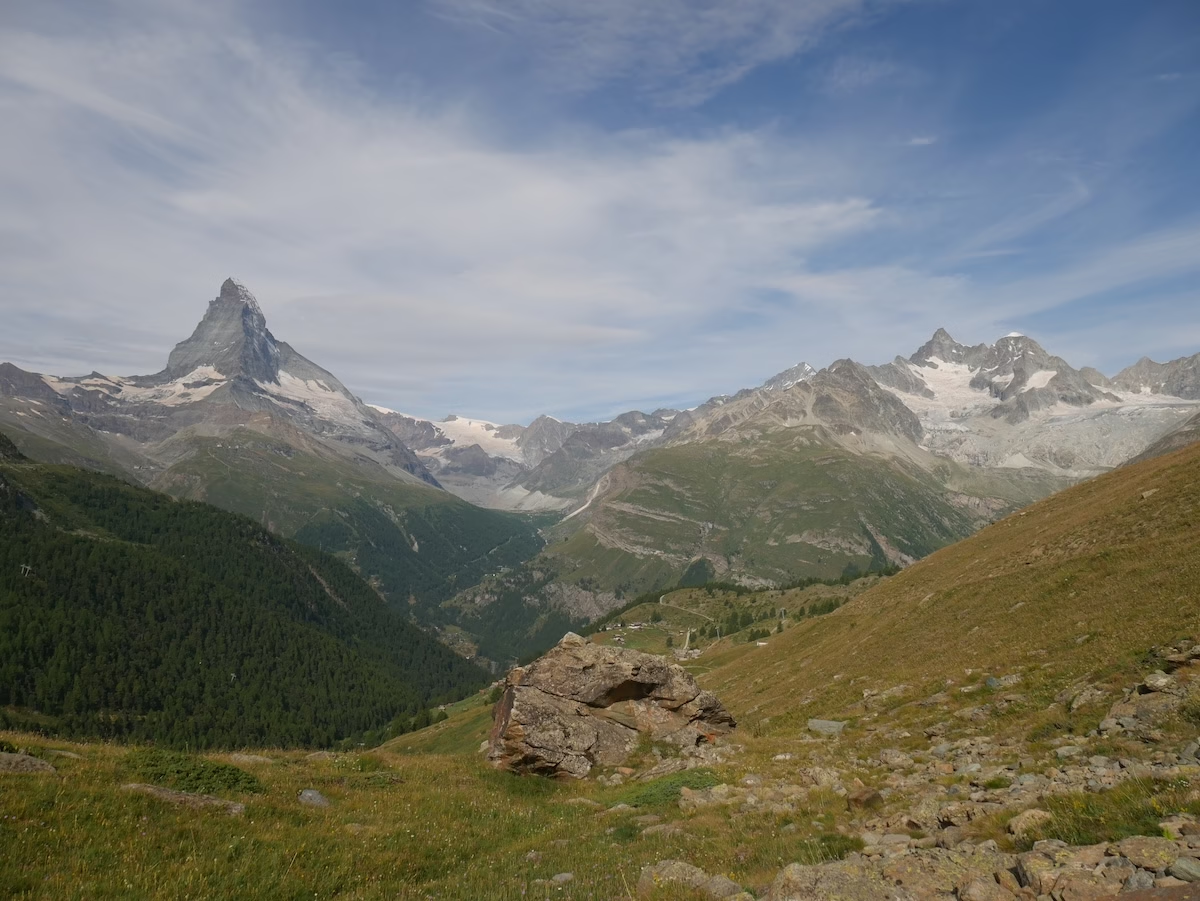
When you think of cheap travel destinations, Switzerland certainly isn’t the first place that comes to mind. A country known for its luxury goods and top-tier ski resorts seems like a world apart from the usual countries favoured by backpackers and the budget-conscious.
About a year ago, I found myself in Switzerland by chance. The Matildas had bowed out of the Paris Olympics and I was looking for my next country to visit. The cheapest possible way out of Marseille, France was a train north to the city of Lyon and then another train west to Geneva, Switzerland.
What followed were some of the best days I’ve ever spent travelling and yes, in some cases, also the most expensive. Let me now detail my attempt to see Switzerland on a budget.
The game plan
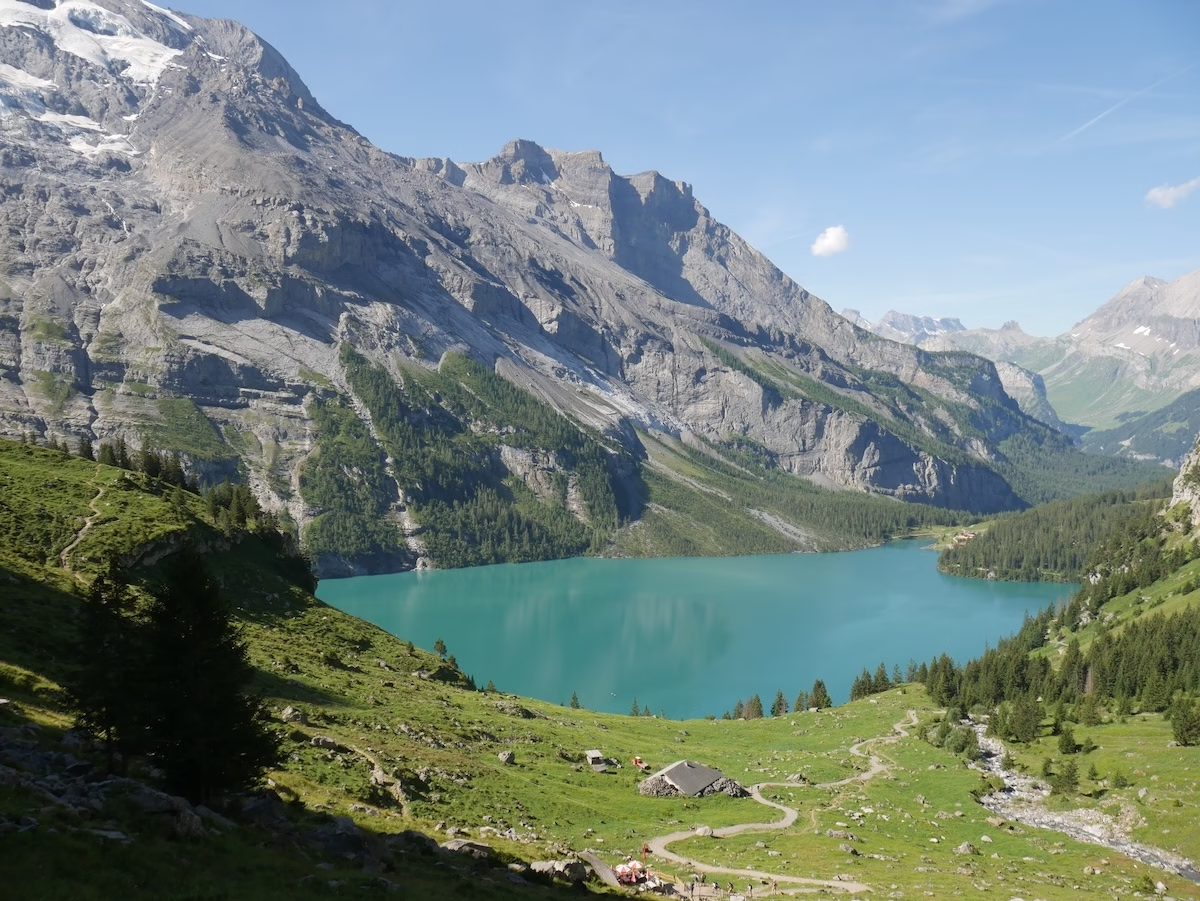
With only a few days left before I was due to arrive in Switzerland, I put together a plan. First and foremost, I wanted to go to Lake Oeschinen. There’s a good chance you’ve also seen photos of this bright blue lake in your feed. I wanted to see if it really looks that good (spoiler: it does).
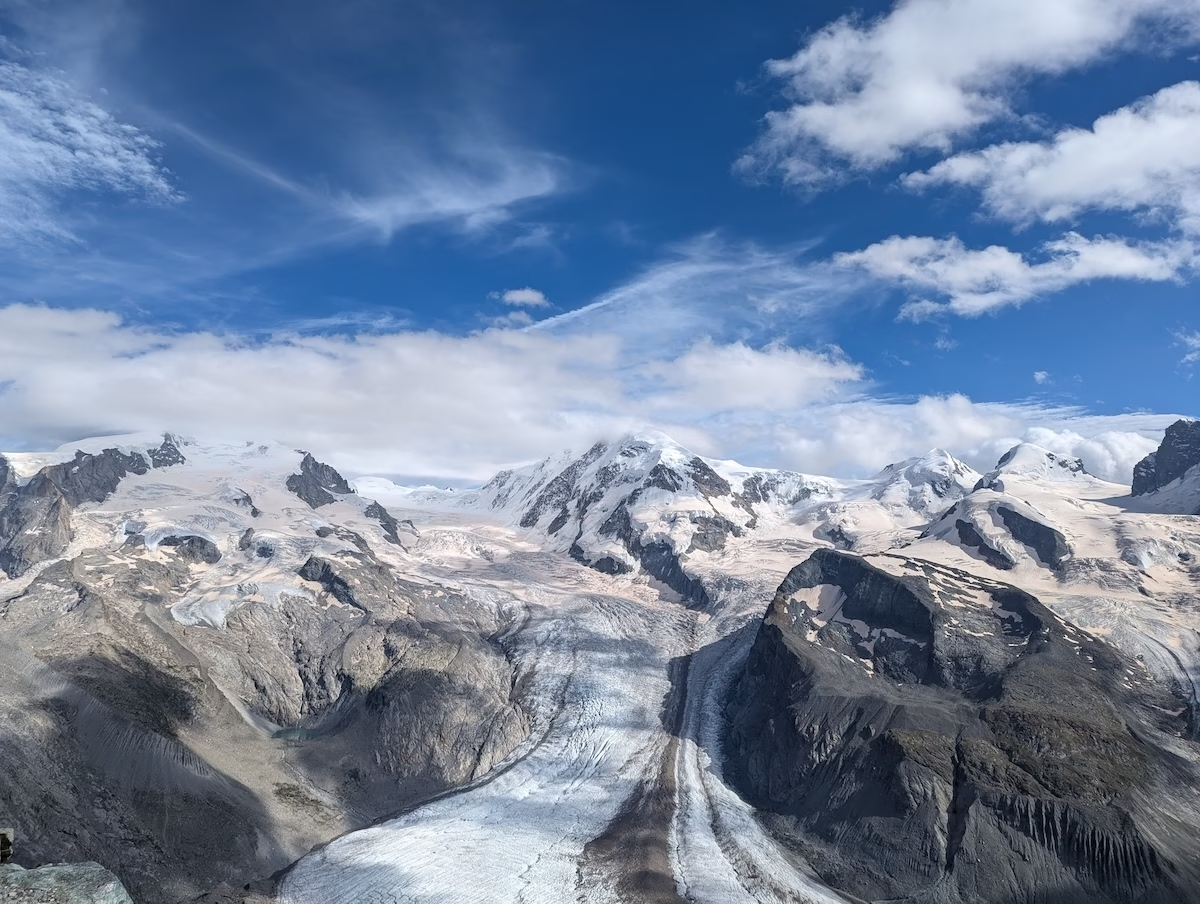
Secondly, seeing the Matterhorn was a top priority. I love a good mountain and this is the country’s most famous and iconic. Finally, after recommendations from other travellers, I put a trip to Europe’s highest railway station, Jungfraujoch, on my list.
After settling on these key destinations, I then had to figure out transport and accommodation. This is where the ‘Switzerland on a budget’ idea becomes properly challenging. I was constrained not just by money but also time since I was booking at most a couple of weeks in advance.
I decided to travel by train. From my starting point in Geneva, I headed to Zermatt for its proximity to the Matterhorn. Then I went to Interlaken to use as a base for visiting both Lake Oeschinen and the Jungfrau Railway. Zurich was my next calling point, which was definitely not just for the Lindt Home of Chocolate. I finished off in Basel because it was the only place I could find a cheap flight out of.
This itinerary meant a lot of time on trains, but you’d struggle to find a more scenic country to travel by rail. One potential improvement to my plan would be to stay overnight in the town of Kandersteg, right next to Lake Oeschinen. I just couldn’t find any last minute accommodation which even vaguely resembled ‘affordable’ so ended up going to the lake from Interlaken instead.
Switzerland on a budget
What was my actual budget? I didn’t set one in advance. My aim was simply to book the cheapest accommodation, keep transport costs as low as possible and avoid spending heaps on food and drink. Similar to my Iceland campervan trip, I have now crunched the numbers.
During my 12 days in Switzerland in August 2024, I spent a grand total of $2,424. Depending on who you are, that might either seem really expensive (“my whole family could go to Bali for that!”) or really cheap (“I spend that much per night while staying in the Swiss Alps”). All I’ll say is that, to spend much less, I would’ve needed to cut out things that are really worth seeing or doing.
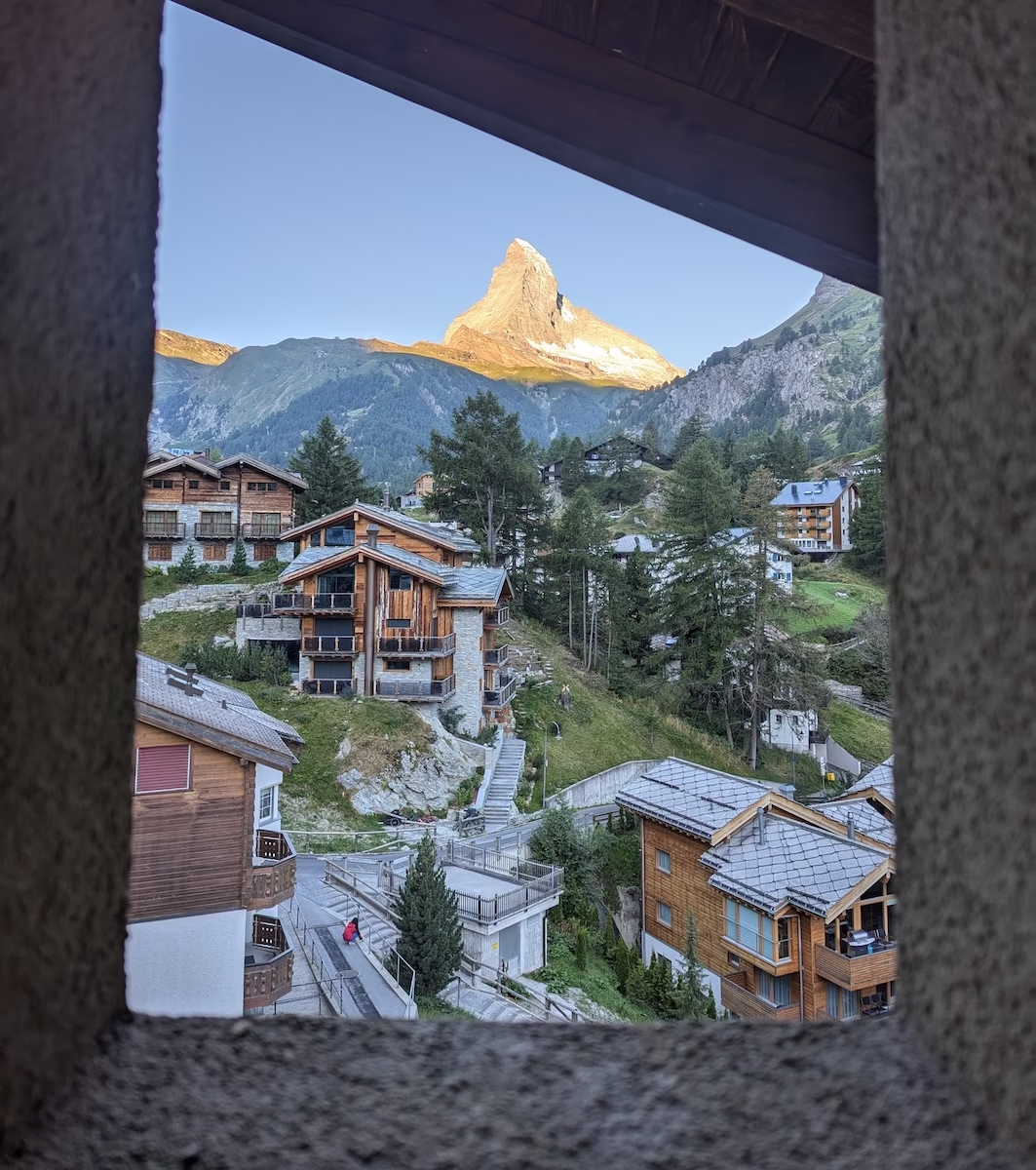
I paid $925 for 11 nights of accommodation in hostels, averaging about $84 per night. That’s a lot of money, but this seems to be par for the course when considering the location and time of year. I have to highlight the Zermatt Youth Hostel as having probably the best view from a hostel I’ve seen:
If you prefer private, summer hotel prices start at $200-300 per night in Zurich, Geneva and Basel. Expect to pay twice as much in Zermatt and Interlaken due to high demand and fewer properties.
The costs add up
$831 went towards transportation costs. This may seem like a shockingly high amount (which it is) but it does include a number of things that are more like attractions, which I’ll explain shortly.
Despite my aim to keep food and drink costs to a minimum, I spent the grand sum of $416 in this category. Another $174 went to groceries, which was often just more food. I did pay $60 for a simple pizza and garlic bread one night in Zermatt, which bumped up that total. (It was the cheapest option apart from a $25+ meal at what might be the world’s most expensive McDonald’s).
$69 went towards tickets to attractions, all of which I’d fully recommend: the International Red Cross and Red Crescent Museum in Geneva ($28), the Lindt Home of Chocolate in Zurich ($30) and the Oeschinensee mountain coaster ($11).
Finally, and least importantly, a load of laundry at my hostel in Geneva cost $9. This was surprisingly cheap considering how much some places charge these days…
How to save big on Swiss transport
Transport was my second biggest spend and this would’ve been even higher without some research. Like many countries, Switzerland offers travel passes for its public transport network. I narrowed down my choices to the Swiss Travel Pass and the Swiss Half Fare Card.
I found the Swiss Travel Pass a bit tricky. You either buy a pass covering 3, 4, 6, 8 or 15 days of consecutive travel, or a ‘flex’ pass which lets you travel on any 3, 4, 6, 8 or 15 days within one month. In either case, you basically need to know your travel days in advance, which I didn’t.
In contrast, the Swiss Half Fare Card is simple: pay 120 Swiss francs ($231) and save 50% on “train, bus, boat and on most mountain lifts or railways, gondola lifts and panoramic routes” for one month.
A number of things that I would consider to be attractions are also discounted with the Swiss Half Fare Card. I saved on my Kombi-Ticket for the Five Lakes Walk and the Gornergrat railway in Zermatt, as well as the cable car to Lake Oeschinen and the Jungfrau Railway.
Including these attractions plus all the trains I took, I saved more than $550 thanks to the card. Taking the price of the card itself into account, that’s still a saving of over $300.
The Swiss Half Fare Card is a good pick if you’re planning a trip similar to mine. Otherwise, you should check if the Swiss Travel Pass (or even a Eurail Pass) would work better. The Swiss Travel Pass does also include free entry to 500+ museums if that interests you.
More tips for Switzerland on a budget
If you’re aiming to see Switzerland on a budget, I’ve got a few more random tips:
- Some cities including Geneva, Interlaken and Basel offer guest cards to tourists. These include free local public transport as well as other perks like discounts on some activities
- In Zurich, you can hire a bike for free through a service called Züri rollt. All that you need is 20 Swiss francs in cash for a deposit. You get this back when you return the bike undamaged
- While prices for everything are generally high, I found sunscreen prices in particular to be way more than Australia. Try to bring your own if you’re planning on doing some summer hikes
Switzerland is now absolutely up there among my favourite destinations. You just can’t beat the natural wonders that it has to offer. It’ll cost you a pretty penny to see the Matterhorn from Zermatt, walk along Lake Oeschinen or enjoy the view from the Jungfraujoch, but I don’t think you’ll regret it. With just a bit of planning, your Swiss trip won’t necessarily send you completely broke either!
Leave a Reply